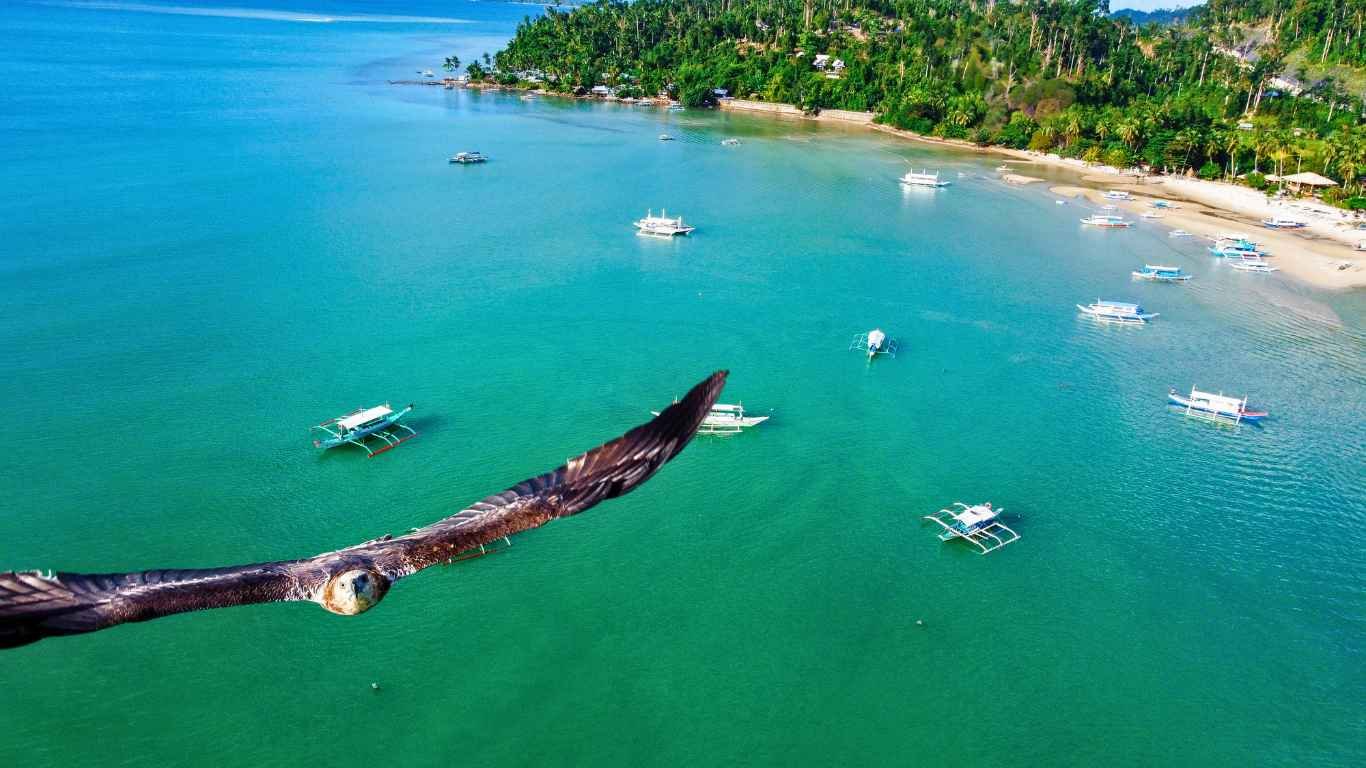
Join Island Hopping from Poblacion Wharf
PP San Vicente Palawan Philippines 2026: Long Beach Overlooking Spots and Port Barton Reefs & Turtles
San Vicente Port Barton Island Hopping Tour A (Joiners) is a shared full-day island hopping tour for guests staying on the Long Beach side of San Vicente. The tour rate is ₱1,500 per person and follows a 9:00 AM to 4:00 PM island hopping schedule. For Long Beach-area bookings, the tour starts at Poblacion Wharf (not at the literal Long Beach shoreline), so guests are directed to the correct departure point. Guests are advised to meet and check in before departure within the 8:30 AM to 9:00 AM meetup window.
El Nido
Beaches & Lagoons
Puerto Princesa
Underground River
Coron
Beaches & Shipwrecks
Balabac
Island & Beaches
Linapacan
Islands & Beaches
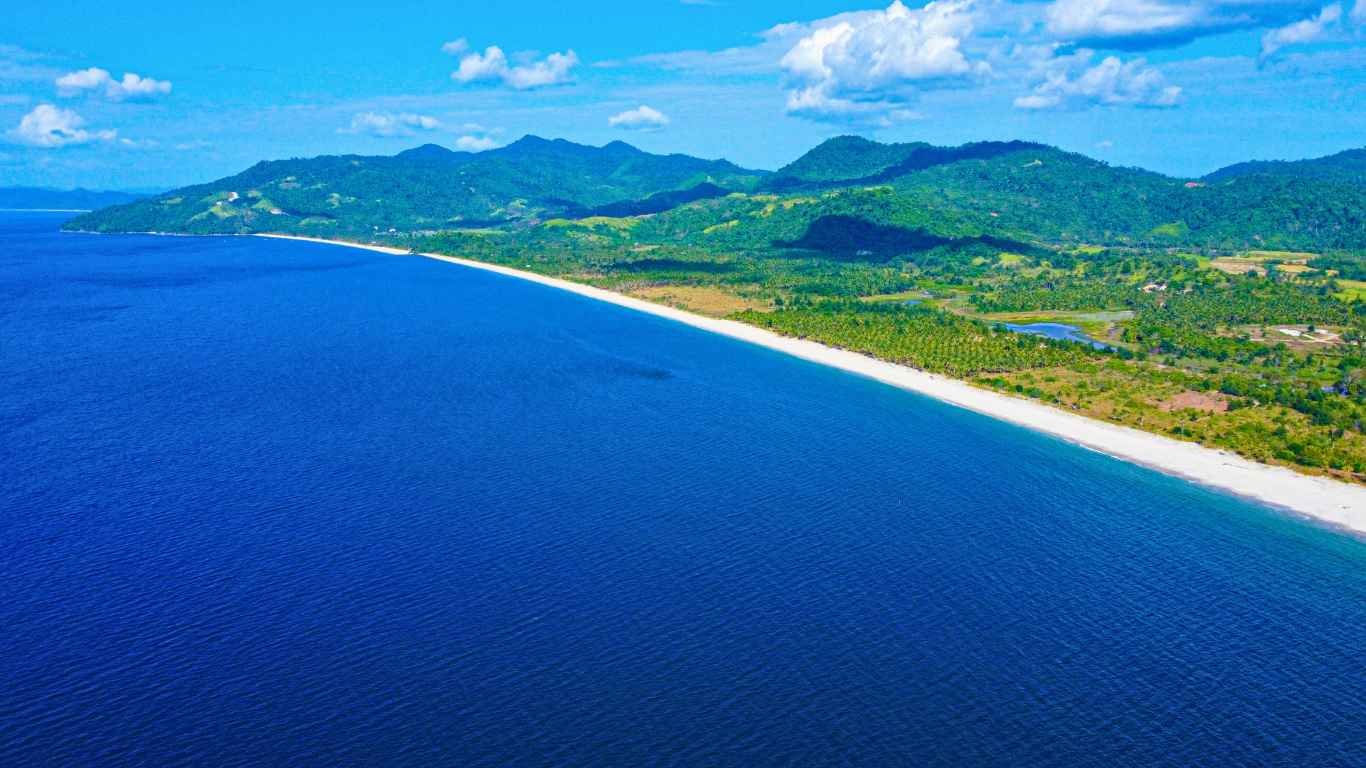
San Vicente is a tranquil coastal municipality on the northwest coast of Palawan, Philippines. Known for its unspoiled landscapes and relaxed, off-the-beaten-path atmosphere, it has become a favored destination for travelers seeking both serenity and adventure. San Vicente is home to Long Beach, the longest continuous white-sand beach in the Philippines, and 2nd longest in Southeast Asia, stretching approximately 14.7 kilometers along the coastline. Unlike Palawan’s more established destinations, the area remains largely undeveloped, allowing visitors to enjoy expansive beaches, crystal-clear waters, and a slower pace of life. While recent infrastructure improvements such as a domestic airport and better road access have made the town more reachable, San Vicente has retained its quiet, laid-back character. With a mix of small-scale resorts, eco-lodges, and local guesthouses, it appeals equally to couples, families, and solo travelers looking for an authentic Palawan experience.
San Vicente is not only a destination for travelers—it has also become a hotspot for investors. Identified as the first Flagship Tourism Enterprise Zone (FTEZ) by the Tourism Infrastructure and Enterprise Zone Authority (TIEZA), it has attracted both local and international investors. This designation positions San Vicente as a model for sustainable tourism development, with growth guided by a master plan that emphasizes environmental protection and community benefit.
With the right mix of investors, San Vicente is poised to cater to all types of tourists—from budget travelers to luxury seekers. It is proudly dubbed the “Beach Village Capital of the Country” because all of its 10 barangays feature stunning white-sand beaches of at least one kilometer. Visitors can enjoy not only its abundant coastline but also its small yet beautiful islands, vibrant underwater attractions such as coral reefs, and shipwrecks dive sites in Daplac (Boayan Island) and Albaguen (Port Barton), plus waterfalls and scenic overlooking spots that the selfie generation loves.
While San Vicente is still considered generally untouched, this makes it the perfect time to explore its wonders. More rooms and establishments will soon be developed, but thanks to its vast stretch of beach and eco-town vision, it is expected to remain peaceful and less crowded. With careful planning and sustainable growth, San Vicente is emerging as a thriving destination and investment hub—one that balances progress with the preservation of its natural charm.
Where to Find San Vicente and How to Get There
San Vicente is located in northern Palawan, roughly midway between Puerto Princesa City and El Nido. It lies approximately 175 kilometers from Puerto Princesa, translating to a 3–4 hour drive via mostly paved roads. Shared vans and buses operate daily between Puerto Princesa and San Vicente, serving both Long Beach (near the town proper) and Port Barton. However, departures may be infrequent, as vehicles typically leave only once they are full. For convenience and flexibility, many travelers opt to book private transfers in advance.
If you are traveling from El Nido, the scenic coastal drive south to San Vicente generally takes about three hours. Drivers unfamiliar with the route should allow extra time, as the road includes sharp curves, elevation changes, and rural stretches. While the drive is generally safe, it rewards patience and careful driving.
San Vicente is also accessible by air via San Vicente Airport (SWL). Cebu Pacific operates scheduled flights from Cebu, significantly reducing travel time. The airport is located approximately five kilometers from the town proper in Poblacion and about the same distance from Long Beach, particularly the Barangay New Agutaya area. Transfers from the airport to accommodations typically take only a few minutes, and most hotels and tour operators can arrange airport pickups. As of early 2026, there are no direct flights from Manila, so most travelers connect through Cebu or travel by land from Puerto Princesa. There are no regular ferry services to San Vicente, making air and land travel the only practical options.
San Vicente Airport
San Vicente Airport plays an important role in the gradual opening of northern Palawan to tourism. Officially opened to aviation traffic in 2017, the airport initially served light aircraft and charter flights, with boutique carrier Air Juan among the first operators. In 2018, San Vicente became part of the domestic airline network when Philippine Airlines, through PAL Express, launched scheduled flights from Clark.
Tourism connectivity expanded further in 2019 when SkyJet Airlines introduced direct Manila–San Vicente flights, significantly improving access to Long Beach and surrounding attractions. These services were suspended during the COVID-19 pandemic as airlines reduced regional operations. Air connectivity resumed in 2024, with Sunlight Air reopening Clark–San Vicente routes, followed later that year by Cebu Pacific’s direct flights from Cebu. These developments restored San Vicente Airport’s role as a secondary gateway to Palawan, offering travelers a quieter alternative to busier airports while supporting the area’s long-term tourism growth.
Best Time to Visit
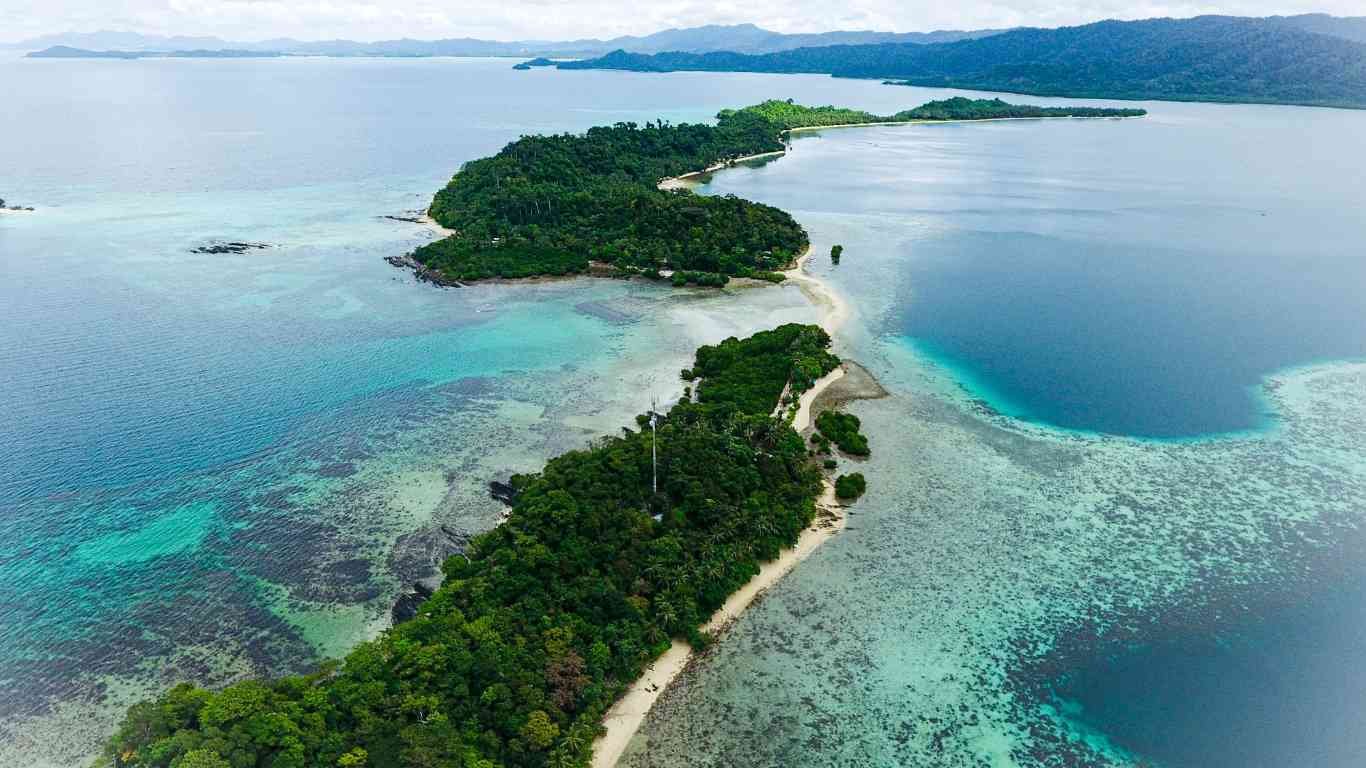
San Vicente has a tropical climate characterized by dry and wet seasons. The dry season runs from November through April and is generally considered the best time to visit. During these months, visitors can expect warm temperatures, abundant sunshine, and calmer seas—ideal conditions for swimming, snorkeling, island hopping, and outdoor exploration. The peak travel period in Palawan typically falls between mid-December and mid-April, aligning with San Vicente’s most favorable weather.
Even during peak season, San Vicente rarely feels crowded due to the sheer scale of its coastline. Long Beach alone spans roughly 14.7 kilometers, making it difficult for visitors to ever feel confined. In addition to the four barangays along Long Beach—Poblacion, New Agutaya, San Isidro, and Alimanguan—other coastal barangays such as Port Barton, Kemdeng, Caruray, Sto. Niño, New Canipo, and Binga each feature their own extensive stretches of white-sand beach, often exceeding one kilometer in length.
The wet season typically runs from June through October, influenced by the southwest monsoon (Habagat). During this period, travelers can expect increased rainfall, occasional overcast skies, and afternoon showers, particularly in July and August. While Palawan is less prone to strong typhoons than other parts of the Philippines, weather disruptions are still possible. Visitors during the wet season should plan flexible itineraries and bring appropriate rain gear. The upside of traveling during this time includes fewer tourists, lusher landscapes, and a more tranquil atmosphere. Overall, the months from December to April remain the most popular for optimal beach conditions, with advance planning recommended during the December–March holiday period.
Top Attractions and Things to Do
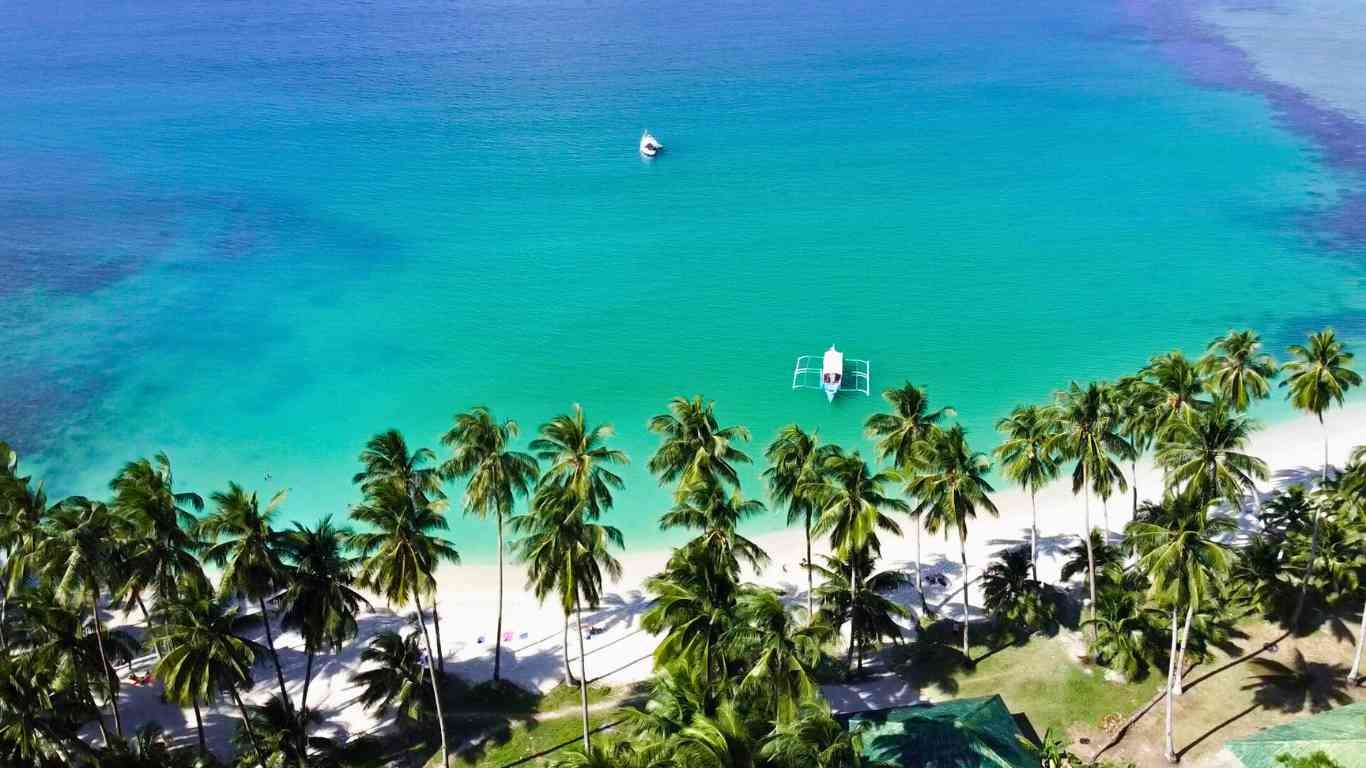
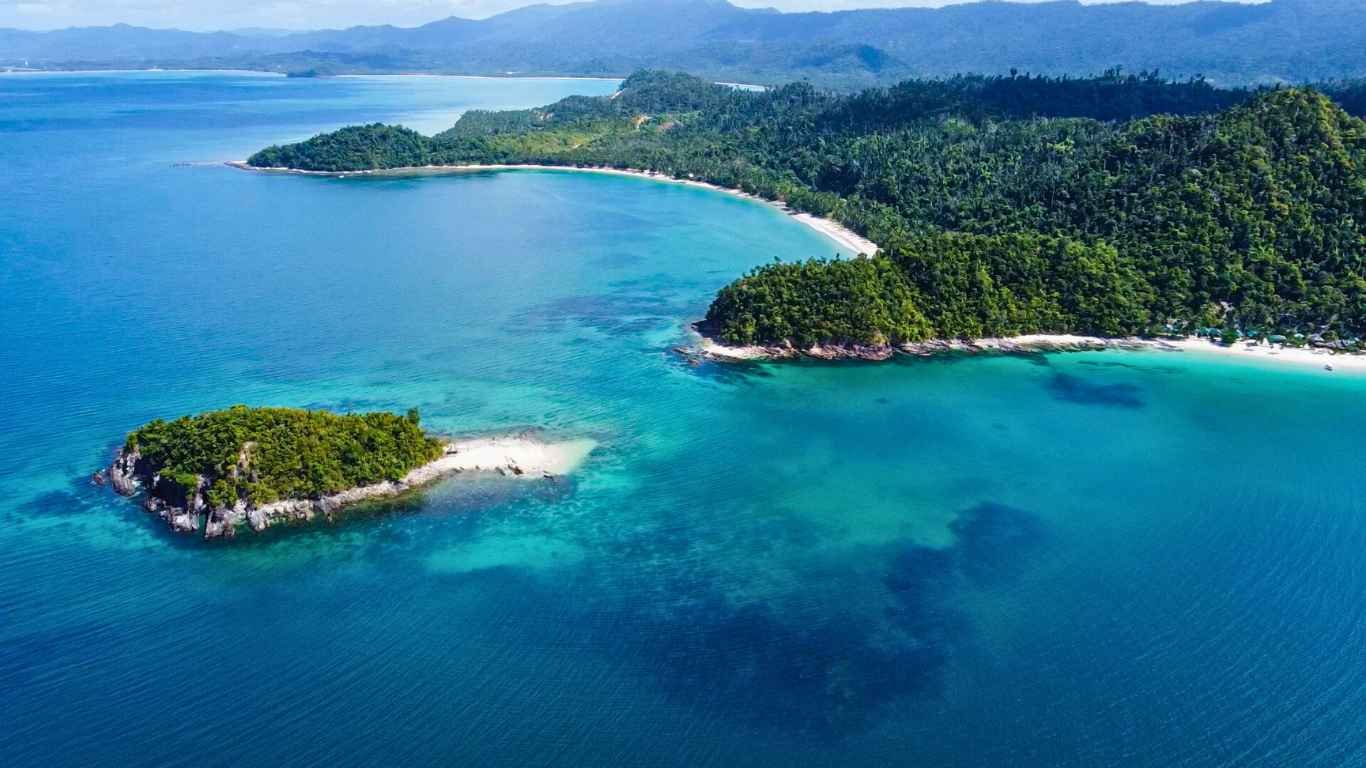
San Vicente offers a wealth of attractions for beach lovers, wildlife enthusiasts, and culture seekers alike. San Vicente highlights the area’s crown jewels: Long Beach and Port Barton. It also boast waterfalls and and small islands that are must-see spots. Visitors usually spend days lounging either on the beach, snorkeling over beautiful coral reefs, kayaking around small islands, swimming with turtles, or trekking upriver to jungle falls. Others rent a bike and explore scenic overlooking spots that gives a remarkable view of the ocean, the long shoreline, the flat land, and the mountain on the backdrop. Whether you prefer lounging on the sand or hiking in the jungle, San Vicente has something to offer every kind of traveler.
Long Beach
Long Beach is the prime crown jewel of San Vicente. It spans over the coastline of 4 baangays (villages) namely Poblaciion, New Agutaya, San isidro, and Alimanguan. This uninterrupted sweep of powdery white sand stretches about 14.7 kilometers from end to end. The panorama of palm trees, blue skies, and calm sea is iconic. Because of its length, even when many tourists are present, the beach never feels crowded. In fact, most mornings you will have a vast stretch of sand almost entirely to yourself. The water along Long Beach is generally calm and clear, making it ideal for swimming and wading. Surfing and skimboarding are also possible at the northern or southern ends when swells pick up in the Amihan season. Very few beachfront resorts and beach bars are scattered along the shore, but the overall development remains low. Many visitors hike or bike the length of the beach – it’s so long that it usually takes a casual walk of 3.5 to 4 hours from one end to the other end. Long Beach is the perfect spot for a scenic sunrise walk, early morning walks, or a peaceful day of relaxation on sand that feels endless.
Long Beach in San Vicente is composed of three coves shaped by two protruding stony landmasses along its 14.7‑kilometer shoreline.
- The first cove begins at Pinagmangalukan in Poblacion and extends up to a portion of San Isidro.
- The second cove is formed when a rocky landmass in San Isidro juts out into the sea, dividing the shoreline and creating an inlet that reaches into part of Alimanguan.
- The third cove emerges where another stony landmass separates the second cove, leaving the remaining stretch of Alimanguan as the final section.
Although these two rocky headlands break the beach into three distinct coves, they are walkable—especially during low tide. Because of this, the coves are considered connected, making Long Beach a continuous 14.7‑kilometer stretch from end to end.
Port Barton
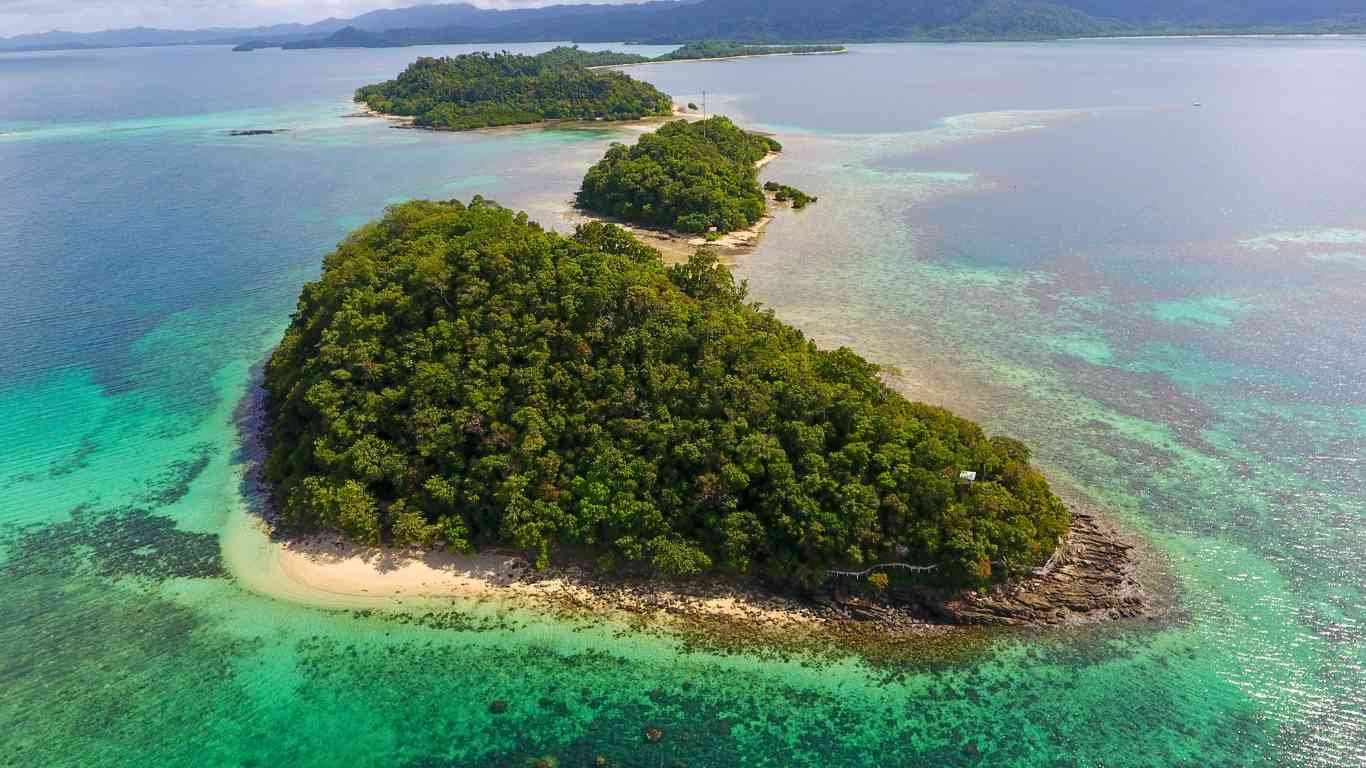
Port Barton is a charming fishing village that serves as the island‑hopping hub of San Vicente. Most of the destinations lie within the Port Barton Marine Park, making it a prime spot for exploring pristine islands and reefs.
The main beach is a tranquil bay with shallow waters. One side is lined with restaurants and dive shops, while the other is shaded by coconut trees. The atmosphere is wonderfully laid‑back: think barefoot strolls during the day and casual alfresco dinners by candlelight at night. Budget accommodations are plentiful here, which is why most visitors choose to stay in Port Barton.
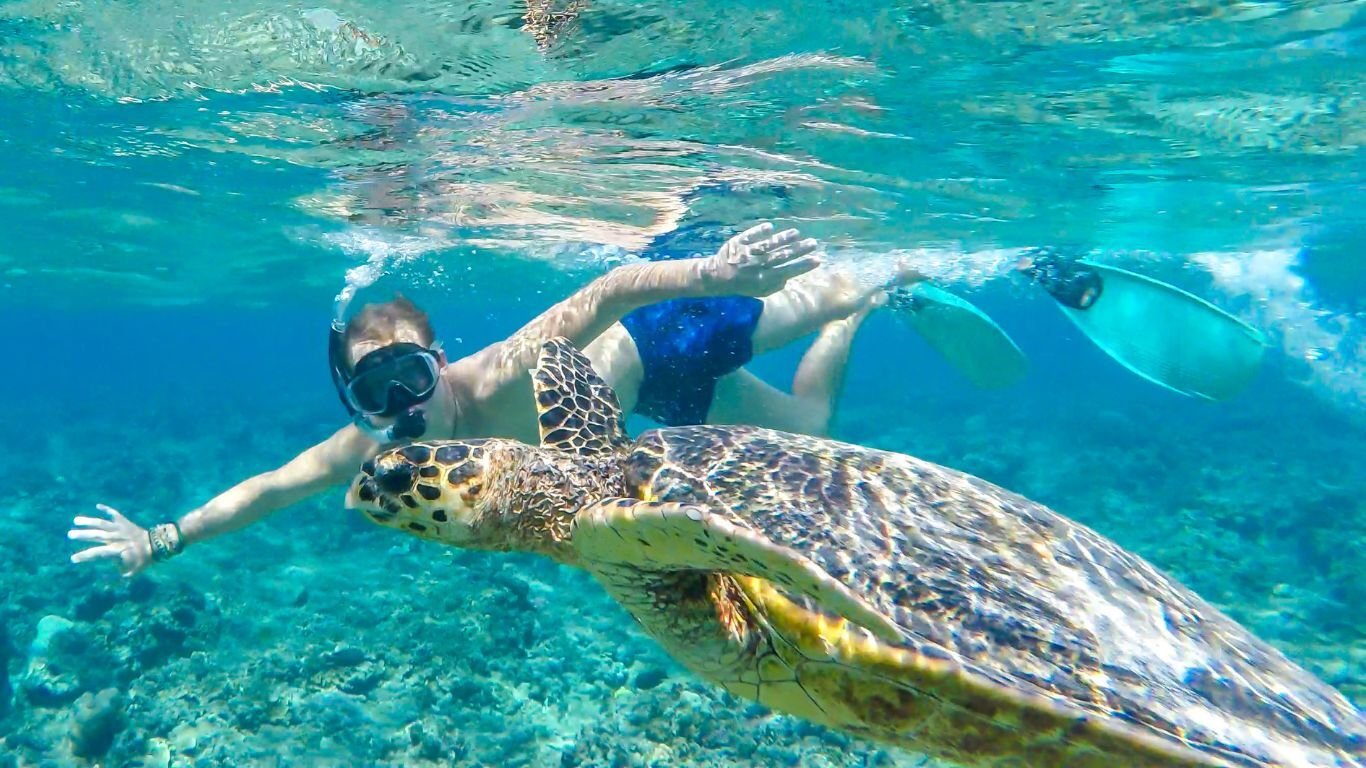
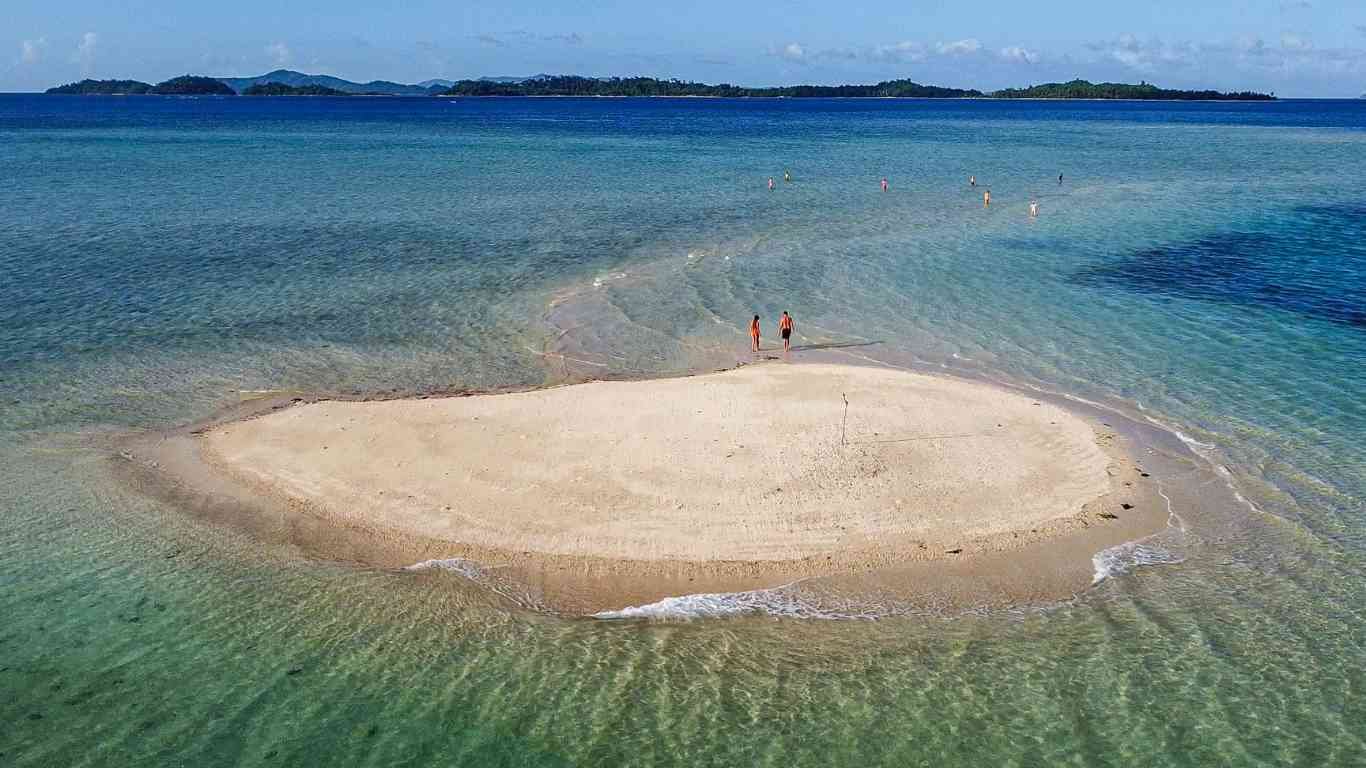
Island hopping is the highlight. Outrigger boats depart daily, taking small groups to nearby islands and reefs for snorkeling and beach time. Typical stops include Exotic Island, Maxima Island, Starfish Island, a turtle‑watching spot, and a vibrant reef. Tours usually come with snorkeling gear and a picnic lunch—grilled fish or chicken with rice are common—so you get a full day on the water. The shallow reefs teem with tropical fish such as butterflyfish, angelfish, and parrotfish, with sea turtles making occasional appearances.
Because Port Barton Bay is sheltered by outer islands, the water remains calm year‑round, making it safe for swimmers and snorkelers of all levels. Tours rarely get canceled, except during truly bad weather or rough seas.
A common misconception is that you must stay in Port Barton to join these tours. In fact, there’s another gateway: Poblacion in Long Beach. From the Poblacion wharf, visitors staying along Long Beach can also access Port Barton’s island‑hopping adventures without needing to transfer accommodations.
Boayan Island
Boayan Island is the largest island off San Vicente and one of its most popular destinations. Tours usually anchor on its eastern beach, where fine white sand meets crystal‑clear water. The island’s coral reef is easily accessible—you can swim straight from the shore into vibrant coral gardens.
On typical snorkeling excursions, visitors often spot schools of jacks, bannerfish, and colorful parrotfish. Larger marine life occasionally makes an appearance too: rays glide through the shallows, and hawksbill sea turtles are sometimes seen grazing on seagrass beds. The atmosphere here is calm and natural. With no hotels or permanent facilities, Boayan remains largely undeveloped, so crews set up simple picnic areas with mats or tables. The tranquility and thriving reef life make the island feel like a private paradise.
Boayan also features a sunken tugboat, a small shipwreck that adds intrigue to its waters. While little is known about how it sank, the site offers an exciting dive spot for scuba enthusiasts. Port Barton has several dive operators who can arrange trips to explore this wreck and other underwater adventures around San Vicente.
Coral Reefs
Tucked along the quiet coast of Port Barton, the surrounding reefs are the heart of its island-hopping charm. Unlike busier parts of Palawan, snorkeling here feels unhurried and intimate, with reefs scattered close enough to shore to be reached within minutes by boat. Calm waters, clear visibility, and shallow coral gardens make Port Barton especially welcoming, even for first-time snorkelers.
Twin Reef is often the gentle introduction, with two shallow coral platforms divided by sand where colorful fish gather in dense schools. From there, Wide Reef opens up into a broad coral field dotted with large table and cabbage corals, giving swimmers space to drift and explore at their own pace. Fantastic Reef shifts the mood entirely, plunging into deeper water where healthier, more dramatic coral formations thrive, creating a richer mix of color, depth, and marine movement.
The Aquarium Reefs—numbered 1 through 4—live up to their name, offering fish-filled waters that feel like swimming through a living display. Aquarium 1 and 2 are lively and easily accessible, Aquarium 3 adds slightly deeper sections for longer exploration, while Aquarium 4 is the most iconic, rising from open water with crystal-clear visibility and constant marine activity. Together with the quieter Capsalay Reef nearby, these sites define Port Barton’s appeal: simple, scenic, and effortlessly rewarding, where the sea feels close, calm, and endlessly inviting.
Waterfalls
Hidden in the forests of San Vicente are waterfalls that reward travelers willing to wander inland. Bigaho Waterfalls in Port Barton offer an easy jungle escape, where a short walk leads to a cool, emerald pool maintained by the local community. Closer to Port Barton proper is Pamoayan Waterfalls, reached by trekking through farms and forest trails, ending at a powerful cascade that feels especially refreshing after the hike.
Further afield in Poblacion, Little Baguio Waterfalls lives up to its nickname as a quiet, forest-hidden gem. Surrounded by thick greenery, its gentle flow and shimmering water make it a peaceful contrast to Palawan’s coastal scenery, and it even plays an important role as a local water source. The calm atmosphere and lack of crowds give the falls an almost secret, untouched feel.
For travelers craving something truly off-the-radar, Kataw-an Waterfalls in Kemdeng is an emerging destination known mostly to locals. Reached by trekking through rural landscapes, it reflects Palawan’s raw, undeveloped side—no facilities, no crowds, just the sound of water and the forest. Together, these waterfalls reveal another face of the Philippines: wild, refreshing, and deeply connected to the land and its communities.
Overlooking Selfie Spots
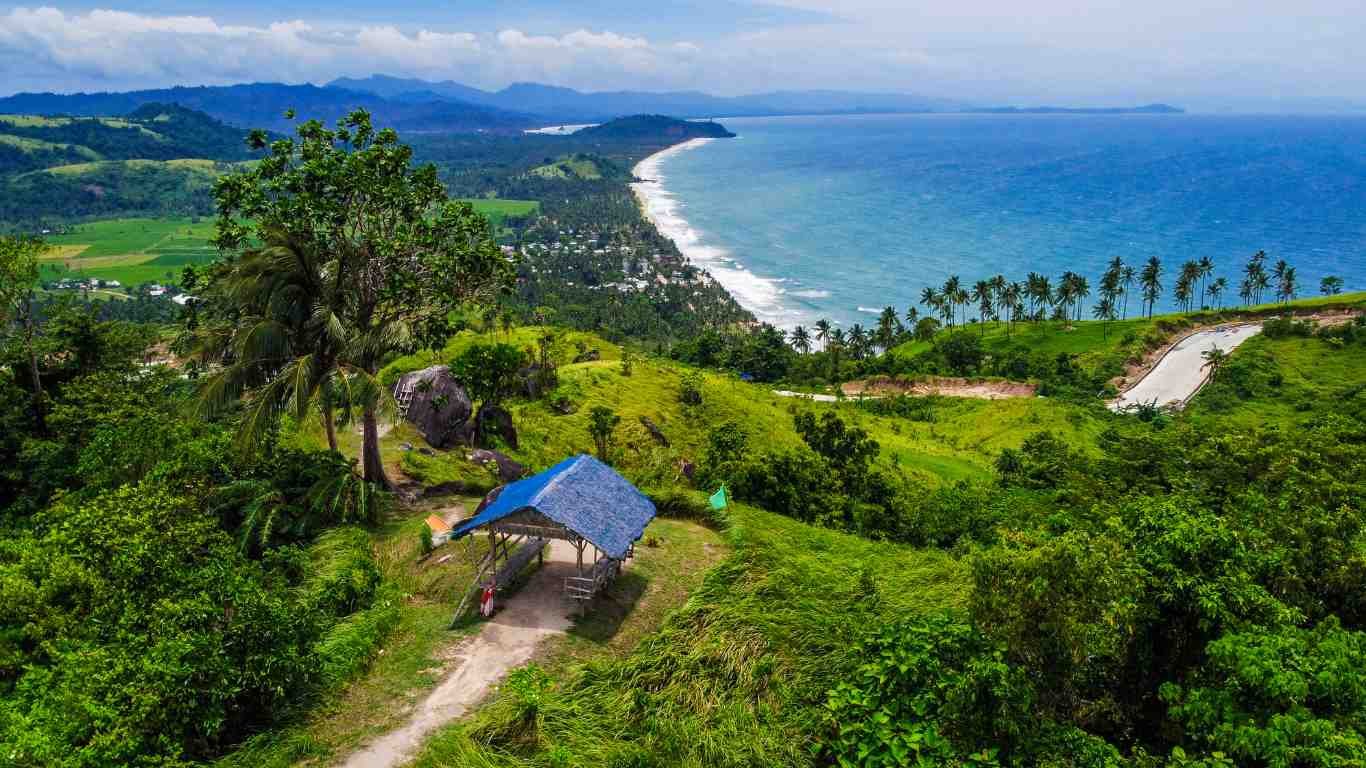
Bato ni Ning-Ning is the most famous viewpoint in San Vicente, instantly recognizable for its giant rock formation that seems to rise above the coastline like a natural monument. From here, travelers are treated to sweeping, panoramic views of Sto. Niño Beach, with its long stretch of sand meeting the calm waters of the West Philippine Sea. The vantage point also reveals the quiet shoreline beyond, a place where the rhythm of the waves and the vast horizon create a sense of openness and freedom. It’s a spot that captures the dramatic beauty of San Vicente in a single glance, making it a favorite for photographers, sightseers, and anyone who wants to feel the scale of Palawan’s landscapes.
Just a short walk away lies San Vic Viewpoint, a gentler alternative that offers a more relaxed atmosphere. Instead of dramatic rock formations, visitors find a simple shelter and benches thoughtfully placed for comfort, inviting them to sit down, slow their pace, and take in the scenery at leisure. The views here are softer but no less rewarding, with a calmer perspective of the coastline framed by greenery and the distant curve of Long Beach. Unlike the busier Bato ni Ning-Ning, San Vic Viewpoint is often quieter, making it ideal for travelers who prefer solitude or a peaceful break in between adventures. Together, these two viewpoints complement each other—one bold and iconic, the other understated and serene—showing how San Vicente balances grandeur with tranquility in its natural attractions.
Closer to town, The 100 Steps offers visitors sweeping views of Long Beach and nearby Boayan island and the stunning islands of Port Barton. Despite its name, you don’t need to climb—there’s a road that allows you to drive all the way to the top. If you don’t have much time to explore San Vicente, this spot is worth prioritizing since it’s easily accessed from the town center, being located right in Población.
Together, these three viewpoints highlight different sides of San Vicente—from iconic and dramatic to peaceful and accessible—making them must-visits for travelers who love scenic views without long hikes.
Local Culture and Festivals
San Vicente’s community is a mix of Cuyonon, Visayan, and Tagalog residents, reflecting Palawan’s diverse heritage. The mood is very relaxed and the people are known for their hospitality. Many locals speak English quite well, especially those working in tourism. Politeness and courtesy go a long way – a simple “salamat po” (thank you) or a friendly greeting is always appreciated. Family life often revolves around sunset beach hangouts or outdoor basketball games in the evenings. There are a few small shops and sari-sari stores where neighbors gather, and it’s common to see fishermen hauling in nets as you walk along the shore.
A highlight of the year is the Malagnang Festival held every June. “Malagnang” means “mud” in the native dialect, referencing the fertile soil and rice farming that sustain the town. During Malagnang Festival, San Vicente proudly showcases its agricultural heritage with colorful street dancing, parades, and exhibits of local produce. If you visit in June, you may see floats made of coconuts and rice stalks, and children partaking in playful mud dances in the town plaza. Outside of festival times, San Vicente life revolves around simple pleasures: fishing, farming coconut and rice, and celebrating fiesta day (the town fiesta, usually in December, honoring Saint Vincent Ferrer). Visitors welcome the chance to join in communal feasts and enjoy freshly prepared seafood barbecues during fiestas. San Vicente’s blend of beach, jungle, and community culture makes it an authentic slice of Palawan.
Where to Stay
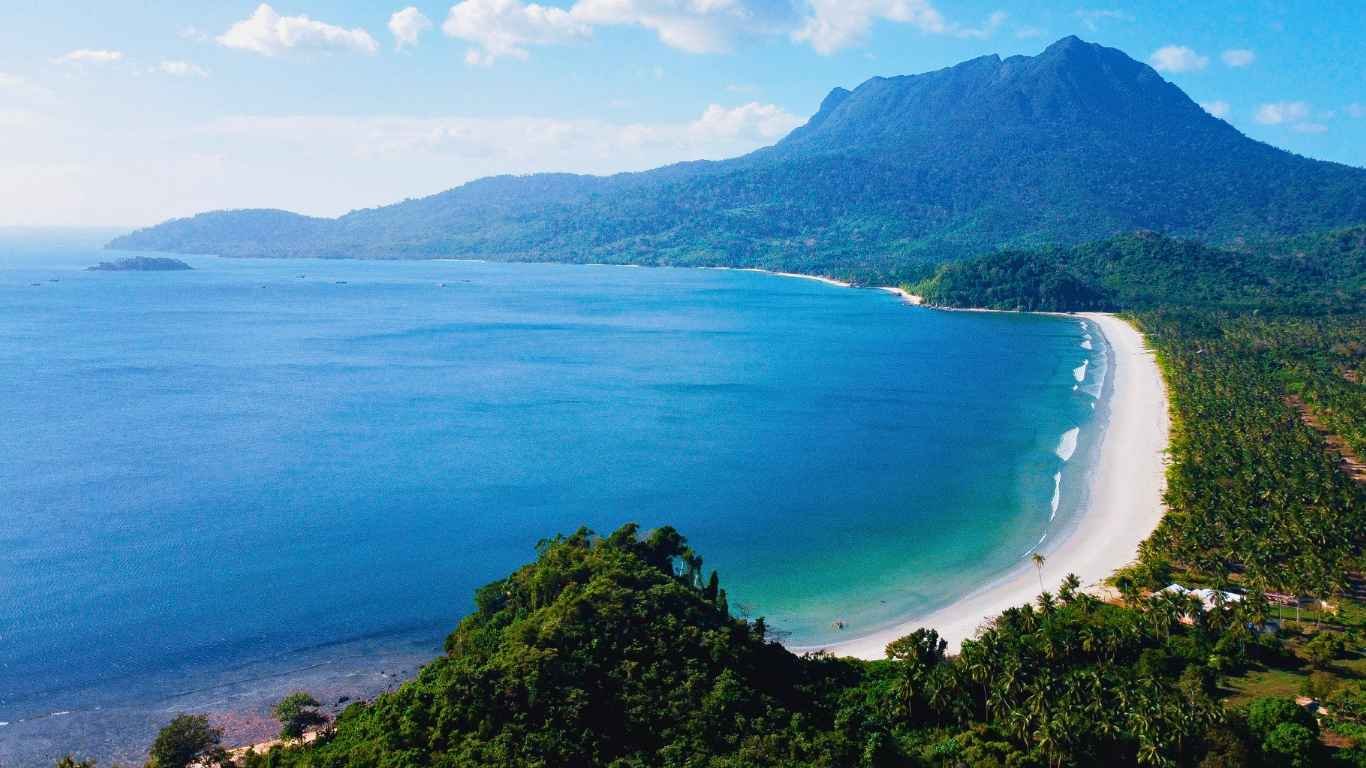
Accommodation in San Vicente is still limited, and travelers generally have two main options: staying along Long Beach or in Port Barton.
Most lodgings are concentrated in Port Barton, where accommodations remain relatively basic compared to the larger resorts now operating at Long Beach. Options range from budget hostels and local inns to mid-range beach resorts and eco-cottages. In Port Barton village, you’ll find small hotels, guesthouses, and bungalows within walking distance of shops and restaurants. Staying here also means easy access to island-hopping tours, as the village is closer to many destinations. Nearby, you can visit natural attractions such as Pamoayan Waterfalls, adding variety to your stay.
Along Long Beach, several guesthouses have been built in recent years, offering direct beach access—perfect for sunset walks and quiet mornings by the shore. Dining options are fewer compared to Port Barton, but the beach itself is already a destination: at 14.7 kilometers, it is the longest beach in the Philippines and the second longest in Southeast Asia. By 2026, three high-end resorts are operating here: Hotel Elizabeth, Club Agutaya, and Ojala Beach Resort. Club Agutaya is the pioneering luxury resort in San Vicente, known for its authentic service and hospitality. The main town center (Población) also has a handful of inns near the highway, though these are not beachfront.
Facilities across San Vicente remain simple. Rooms typically come with fans and private bathrooms, with hot water available in some places. Reliable air-conditioning and televisions are rare, and Wi-Fi—though available in larger resorts—can be slow. Since tourism is growing, booking one to two weeks in advance is recommended, especially during peak season (December–February). Budget travelers can find dorm beds in hostels, while couples may prefer beachfront cottages with verandas.
The advantage of staying at Long Beach is convenience: you’re closer to scenic viewpoints, the Población wharf (jump-off point for Port Barton island-hopping), and San Vicente Airport, which is just minutes away. For travelers seeking more activity and accessibility, Long Beach is a strong choice. For those who prefer a quieter, rustic atmosphere, Port Barton remains a favorite.
Along Long Beach, travelers will find a range of accommodations to suit different budgets. For those seeking affordable options, Amihan Beach Resort (formerly Ursula) and Victoria Beach House provide simple yet comfortable stays with direct access to the sand. These resorts are ideal for visitors who want to enjoy the beauty of Long Beach without spending too much.
For mid‑range choices, Lazuli Resort and Baibai Inn offer a balance of comfort and value. Both provide well‑appointed rooms and a relaxed beachfront atmosphere, making them popular among couples and families who want a bit more convenience while still enjoying the natural setting.
Other resorts near Long Beach include Seaside Blue Inn, Foxy’s Beach Resort, Sunset Beach Resort, Baia Beachfront, Acuario Beach Inn, Milanel Beach Resort, and PeakView Resort Palawan. These properties range from cozy inns to beachfront resorts, giving visitors plenty of options depending on their style and budget. Together, they highlight the growing variety of accommodations in San Vicente’s most iconic stretch of sand.
Looking ahead, Megaworld Paragua Coastown’s Savoy Hotel and Paragua Sands Hotel are set to open, significantly boosting the number of rooms in the Long Beach area and giving travelers even more options.
Food and Drink
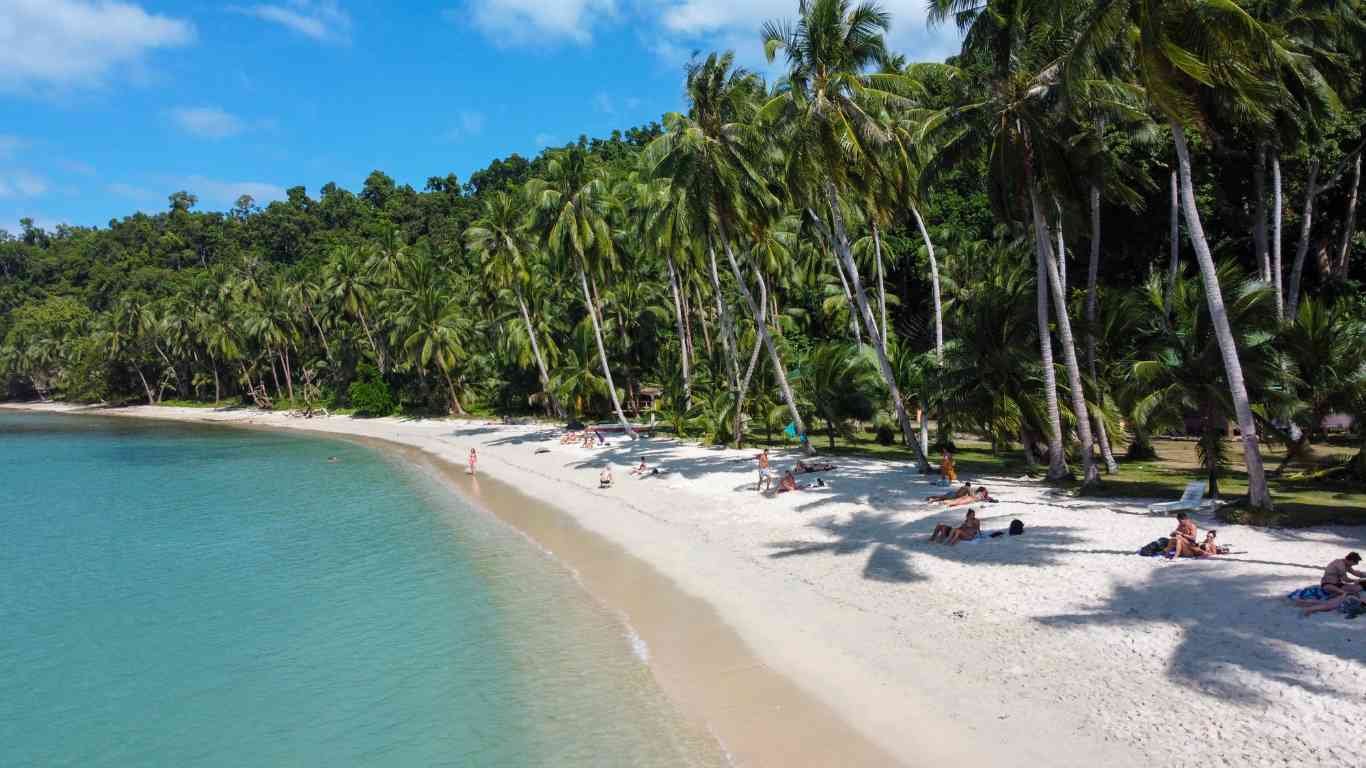
San Vicente’s cuisine revolves around fresh seafood and Filipino comfort food. Grilled fish—often pompano or grouper—along with squid, shrimp, and seasonal lobster dominate local menus. These are typically served with garlic rice and vinegar-based dipping sauces. A must-try dish is kinilaw (Filipino ceviche), made from raw fish or seafood marinated in vinegar, ginger, onions, and chili, offering a zesty and refreshing appetizer. You’ll also find plenty of pork or chicken barbecue skewers, flavored with sweet-spicy marinades, alongside tropical fruits such as banana, coconut, mango, pineapple, and guava, which are used in shakes and desserts. Beachside restaurants often serve creative smoothies—like mango-banana or watermelon-turmeric—that are perfect for cooling off in the tropical heat. For something quintessentially local, sip buko juice (young coconut water) straight from the shell.
Where to Eat
The highest concentration of food and bar options is in Port Barton, since most accommodations are located there and many have their own restaurants or restobars. Expect beachside cafés, small eateries, and even a few international choices such as Italian or Indian cuisine. Long Beach has fewer restaurants due to its limited accommodations, but you’ll still find good options in the Baywalk area. High-end resorts also feature some of the best dining experiences in San Vicente—Cafe Lily at Club Agutaya is a standout.
Many inns and resorts offer simple on-site restaurants, while roadside turo-turo stalls serve affordable rice meals, egg dishes, and fried favorites for just a few dollars. Breakfasts are typically Filipino-style—fried eggs, rice, and coffee—but pancakes and bread are also common. If you’re up early in Port Barton, look for stalls selling taho (silken tofu with syrup) or rice porridge, a local morning staple.
Don’t expect big nightlife or fancy cocktails—San Vicente evenings are laid-back. Picture reggae music by torchlight on the beach, fresh seafood grilled to order, and cold beer from a cooler. Fresh fruit shakes made with banana, melon, mango, or soursop (locally called guyabano) are widely available, and many resorts include simple breakfast packages with pancakes or eggs and rice.
If you have dietary restrictions, it’s best to communicate them clearly. Most restaurants can accommodate mild preferences, but keep in mind that local diets are heavy on rice, fish, and meat.
Getting In and Around
The primary modes of local transportation are tuktuks, tricycles, and motorbikes. These serve as San Vicente’s taxis—you can hire one to take you around town or to nearby beaches. Some travelers prefer renting a bicycle or car, which allows more freedom to explore. Keep in mind that roads outside the main highway are often unpaved, so a sturdy motorcycle or off-road vehicle is best for reaching places like waterfalls or Bato ni Ning-Ning.
For inter-town travel, the only public transport option is shared vans. Van services connect Puerto Princesa and Port Barton several times a day, usually departing early in the morning from either end. Travel time is about 3 to 3.5 hours. Vans also connect Puerto Princesa and Población (San Vicente town center), with a similar schedule and a travel time of 3.5 to 4 hours.
For van transfers from Puerto Princesa International Airport to San Vicente, you can contact DPalawan Travel and Tours. For DIY travelers, head to Irawan Public Terminal, where buses and vans pick up passengers bound for San Vicente. Schedules, however, change frequently, so flexibility is key.
Practical Tips
- San Vicente has no rideshare apps, so always agree on a fare with drivers before starting your trip.
- Expect low speeds and frequent stops—it’s common to encounter cows or dogs crossing the road, or roadside stalls where families sell rice and coconuts.
Safety Notes
- Tricycles and motorcycles usually lack seat belts and can be bumpy, especially on mountain roads. Hold on tight and check the vehicle’s condition before heading to remote spots.
- If renting a motorcycle, test the brakes and lights before setting out, and always wear a helmet (insist your driver does too).
- For vans, make sure the vehicle is licensed and not overcrowded.
- Drivers in Palawan generally drive cautiously at slow speeds, but dirt roads and local traffic can still pose challenges. If any ride feels unsafe, it’s perfectly fine to politely decline and look for another operator.
Travel Tips
Money
- Cash is essential in San Vicente. Many small shops and eateries accept only Philippine pesos. ATMs are available in Port Barton and Población (town center), but not elsewhere. Credit cards are accepted only at a few larger resorts and upscale restaurants.
- Banco de Oro (BDO) is the only bank in San Vicente, with a branch in Población. Most ATMs accept VISA and MasterCard. Money remittances can be claimed at Palawan Pawnshop, Cebuana Lhuillier, and M Lhuillier, all located in Población.
Connectivity
- Mobile coverage (Smart and Globe) is available in towns and beach areas but can be spotty in remote locations. For reliable data, consider buying a local SIM card with a data plan, available at Puerto Princesa airport or in town. Download offline maps of Palawan before your trip, as internet access isn’t guaranteed everywhere.
Etiquette
- Filipinos value politeness and respect. Greet locals with a smile and say “salamat” (thank you) in shops and eateries. In small barangay communities, don’t litter or disturb the surroundings. Removing shoes before entering someone’s home or a small eatery is customary. If a local invites you into their home or fishing boat, it’s a compliment—bringing a small gift like snacks or candies is a thoughtful gesture.
Health & Safety
- San Vicente is generally very safe, with violent crime extremely rare. Still, use common sense: keep valuables hidden and stay alert in busy areas. The ocean is usually calm, but always wear a lifejacket on boats and avoid swimming alone or at night.
- Mosquitoes can carry dengue fever, so minimize bites with repellent and by sleeping under netting if your room isn’t air-conditioned.
- San Vicente District Hospital and San Vicente Rural Hospital are located near Long Beach, but for serious medical issues you’ll need transfer to Puerto Princesa or Manila. Carry any prescription medications you need.
Tours & Activities
- When booking tours, clarify what’s included—number of stops, meals, and equipment. It’s normal to share boats or vans with other travelers. Pack essentials like sunscreen, water, swimsuit, towel, and dry clothes in a light day bag, as boat operators cannot guarantee secure storage.
- For peace of mind, deal only with legit tour agencies such as D’Palawan Travel and Tours, which publishes transparent terms, inclusions, and packages at DPalawanTravelAndTours.com.
Others
- Be mindful of the environment: pick up trash, avoid touching coral or fish when snorkeling, and use biodegradable soap when swimming in natural areas.
Bring a portable charger or extra batteries for your phone or camera, since charging outlets may be limited. - Pack smart for a tropical outdoor trip: lightweight, quick-drying clothes are best. Don’t forget reef-safe sunscreen to protect both your skin and the coral reefs. Bring insect repellent, and consider long sleeves or pants in the evening to ward off mosquitoes—San Vicente’s lush greenery means they’re often present. A wide-brimmed hat and sunglasses will help with the tropical sun.
- If you plan to hike or swim at waterfalls, pack sturdy sandals or water shoes, as river trails can be slippery. A small daypack with a rain jacket and water bottle is essential. Divers and snorkelers should bring their own mask and snorkel, since rental gear can be limited in quality. A flashlight or headlamp is also useful—power outages are rare but can occur in remote areas.
Additional Information and FAQs
How many days do you need in San Vicente? A long weekend (4–5 days) is enough to see most of San Vicente’s highlights at a relaxed pace. For example:
- Day 1: Arrive and spend the afternoon unwinding on Long Beach.
- Day 2: Go island hopping from Port Barton.
- Day 3: Take a land tour—hike to waterfalls or scenic viewpoints in the morning, then enjoy a New Agutaya’s Mangrove River Cruise with Kayaking in the afternoon.
- Day 4: Depart, or add another day for more adventure.
If you extend to 5–6 days, you’ll have time to rent a bike and explore San Vicente’s other beaches. The town is dubbed the “Beach Village Capital of the Philippines” because all 10 barangays boast stunning white-sand beaches of at least one kilometer.
- To the north: Discover the silica sands of Sto. Niño, the pristine shores of New Canipo, and Binga’s Lapus-Lapus & long stretch of beach.
- To the south: Visit Kemdeng, where the Paragua Coastown development is underway, or relax on its quiet sands. Explore Nano-Nao Beach, the main cove of Port Barton, and its famous White Beach and Coconut Beach.
This itinerary is most convenient if you’re staying in the Long Beach, which offers easy access to both town and nearby attractions. Many travelers find that 4–5 full days allow a balanced pace without rushing.
Extending to a week gives more flexibility—such as revisiting favorite spots or exploring lesser-known viewpoints of Bunuangin in Port Barton. Ultimately, it depends on your interests: if you love snorkeling or diving, an extra day for underwater adventures is worthwhile. Overall, 4–6 days is ideal for a thorough San Vicente trip..
Is San Vicente worth visiting? Absolutely. San Vicente offers a different experience from busier Philippine destinations. It has long stretches of untouched beach, vibrant coral reefs, and friendly locals. Many travelers describe it as a “hidden gem” or an “alternative Palawan” for those who have seen Coron/El Nido and seek solitude. Guidebooks and tourism sources emphasize that it remains relatively undiscovered, so you often feel like you have the place to yourself. Reviews often note that visitors return feeling it was a highlight of their Philippines travels. In short, if you enjoy nature, peace, and off-the-beaten-path adventure, San Vicente is well worth the trip.
What’s the difference between Long Beach and Port Barton? Long Beach and Port Barton are two distinct coastal areas within San Vicente, each offering a different travel experience.
- Long Beach refers to the 14.7-kilometer sandy stretch that spans the coastal areas of Barangays Población, New Agutaya, San Isidro, and Alimanguan. It is the longest beach in the Philippines and the second longest in Southeast Asia. Resorts here are scattered, making it ideal for travelers who prefer peace, space, and fewer crowds. Long Beach is not only an attraction in itself but also a growing hub, with more accommodations expected as land investors develop their properties into operating resorts. Poblacio Wharf in the Long Beach area is also a jump-off point for island-hopping tours to Port Barton.
- Port Barton, on the other hand, is a small bay and barangay of San Vicente. It serves as the main base for travelers, with most of the town’s hotels, restaurants, and shops located here. Port Barton is also the jump-off point for island-hopping tours, making it popular among visitors who want easy access to activities and a lively, social atmosphere.
Both destinations are worth visiting. Many travelers choose to experience both sides of San Vicente: staying in Port Barton for its amenities and relaxed nightlife, and spending time at Long Beach for total crowd-free relaxation.
Are there insects or health concerns? As in any tropical destination, you will encounter mosquitoes, especially at dawn, dusk, or near standing water. Wear mosquito repellent and consider long sleeves in the evening to minimize bites. Dengue fever can occur in the region, so prevention is important. Flashlights or insect coils at night also help. Some beaches may have sandflies, so shake out towels and clothing before use. The local waters are generally safe for swimming, but always be mindful of strong waves and underwater currents. Around rivers and waterfalls, use caution—depths and rocks can be difficult to judge, and paths may be slippery. Bring a small medical kit for basic needs. If you have chronic conditions, carry your prescription medications, as local stores have only a few pharmacies with limited stock.
What amenities are available? San Vicente’s infrastructure is minimal. Electricity (220V) is usually available in town and resorts, but there may be occasional outages, espcially during heavy rain. Most places provide 24/7 power or have generators at night. Mobile networks (Philippine Globe and Smart) cover Port Barton, Long Beach, and main roads, but may fade in deep forest or valleys. Many hotels and restaurants offer Wi-Fi, though speeds can be slow. The main language is Filipino (Tagalog) and Cuyonon (a local dialect), but English is widely spoken in tourist areas. For money matters, your best bet is ATMs in Port Barton and Poblacion. Few places accept credit cards, so plan to use cash (peso) for most expenses. Drinking water: bottled water is sold everywhere; resorts also provide jugs of filtered water. Tap water is not recommended for drinking unless boiled. Hand-sanitizer and biodegradable soap are useful to bring.
What wildlife can I expect? The marine life around San Vicente is rich. Common sightings on snorkel tours include colorful reef fish (angelfish, butterflyfish, parrotfish, clownfish, and more), sea urchins, and sometimes reef sharks or sea turtles. On land, you may spot monitor lizards crossing roads or various tropical birds (kingfishers, bee-eaters, herons). In the evenings near mangroves, fireflies are a treat. Some monkeys can also be seen; one more common land creature is the large coconut crab (kalabao) found in isolated areas. Overall, expect to see plenty of fish and invertebrates if you snorkel, and small wildlife if you explore forests, but remember to observe from a distance.
What currency and language are used? The local currency is the Philippine Peso (PHP). ATMs (for peso withdrawals) are available in Port Barton and Poblacion, so carry enough cash when traveling to remote spots. A local bank accepting Visa and Mastercard recently opened in Poblacion. Filipino (Tagalog) is the national language and a local dialect (Cuyonon) is spoken, but English is widely used in shops and hotels. It’s polite to learn a few basic phrases like “salamat” (thank you) and “mabuhay” (welcome) – locals appreciate the effort. Note that the typical greeting is a nod or a handshake; there is no strict dress code but beachwear is fine by the shore and more modest cover-ups are expected in town or restaurants.
Why is San Vicente called the “longest beach”? The aptly named Long Beach is the longest continuous white-sand beach in the Philippines, stretching an impressive 14.7 kilometers—about four times longer than Boracay’s famous shoreline. It is also recognized as the second longest beach in Southeast Asia. Long Beach is slowly emerging as an eco-tourism hotspot, with local authorities emphasizing sustainability, cleanliness, and keeping the area crowd-free. Its sheer size and pristine condition make it one of Palawan’s most remarkable natural attractions, offering visitors a tranquil alternative to busier destinations. This version highlights the scale, uniqueness, and eco-tourism appeal of Long Beach while keeping the tone inviting and informative.